Pradip S.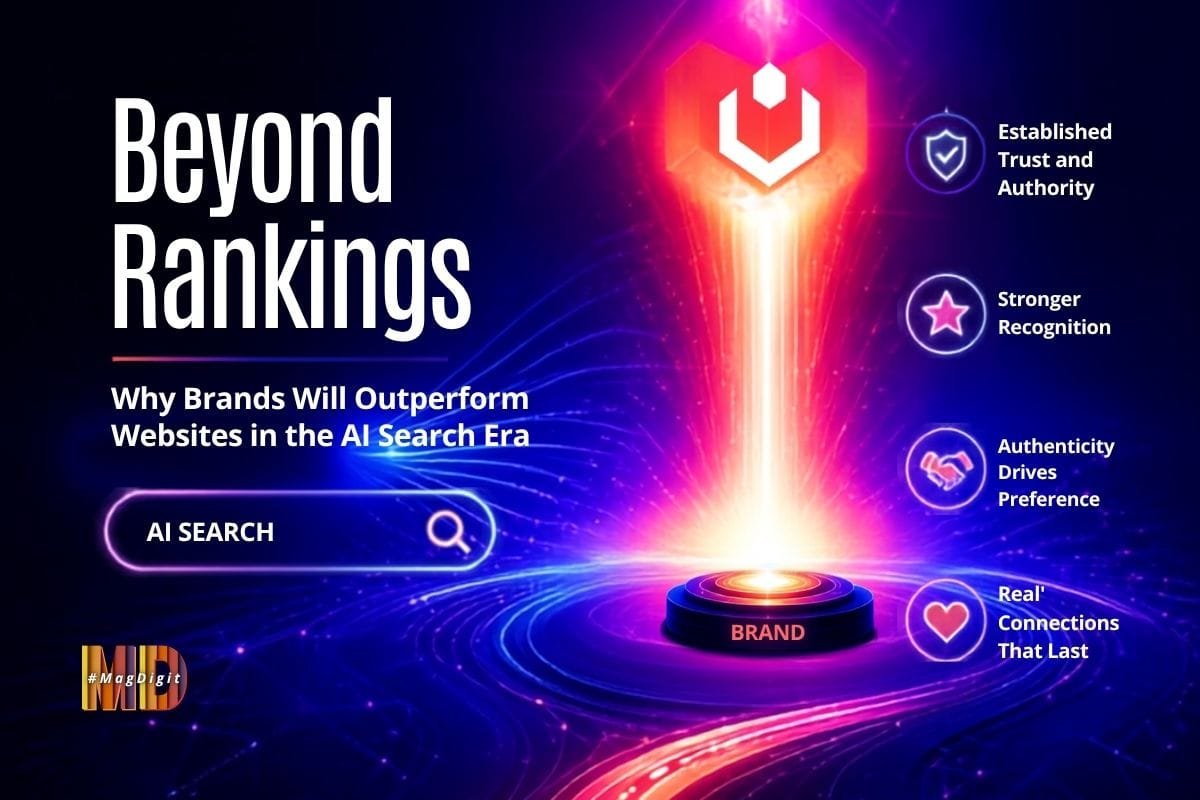
For decades, businesses have treated SEO as a race to the top of Google’s search results. The goal was simple: optimize a webpage, rank for a keyword, attract traffic, and convert visitors into customers.
That strategy worked remarkably well when search engines primarily displayed a list of web pages.
Today, however, the way people discover information is changing rapidly.
Users are asking questions directly to ChatGPT, Google AI Overviews, Gemini, Perplexity, Claude, and other AI-powered assistants. Instead of presenting ten blue links, these platforms generate answers by analyzing information from trusted sources across the web.
This shift signals an important reality:
The future of search belongs less to websites and more to brands.
The businesses that invest in credibility, authority, and recognition will be recommended more often than those relying solely on traditional SEO tactics.
Table of Contents
Search Has Evolved From Finding Pages to Finding Answers
Traditional search engines were designed to retrieve the most relevant webpage for a query.
AI search works differently.
Instead of asking:
“Which page ranks highest?”
AI models ask questions like:
- Which source is trustworthy?
- Which company is recognized in this industry?
- Is this information consistently supported across multiple sources?
- Does this business demonstrate real expertise?
In other words, AI evaluates entities—not just URLs.
A technically optimized website may still be valuable, but optimization alone is no longer enough when artificial intelligence is expected to synthesize reliable answers.

The Real Ranking Signal Is Trust
One of the biggest misconceptions about AI search is that keywords have become irrelevant.
They haven’t.
Keywords still help search engines understand context and user intent. However, when multiple websites discuss the same topic, AI systems increasingly prioritize the sources they trust most.
That trust comes from signals such as:
- Consistent brand mentions across reputable websites
- Author expertise and credibility
- High-quality editorial backlinks
- Positive customer reviews
- Industry recognition
- Accurate business information across platforms
- Strong digital PR presence
- Topical authority built over time
These signals are significantly harder to manipulate than traditional ranking factors.
They are also the foundation of brand equity.
AI Doesn’t Recommend Unknown Businesses Easily
Imagine asking an AI assistant:
“Who are the best cybersecurity consultants for small businesses?”
Or:
“Which immigration attorney should I consult in Atlanta?”
The AI is unlikely to recommend a business simply because one of its webpages ranks for a keyword.
Instead, it looks for businesses that demonstrate authority across multiple trusted sources.
That authority might come from:
- news publications
- industry directories
- podcasts
- professional associations
- expert interviews
- research publications
- customer reviews
- educational content
- speaking engagements
- consistent online reputation
The stronger the brand footprint, the greater the likelihood of being recommended.
Why Strong Brands Are Becoming More Visible
Think about how people make purchasing decisions today.
Before contacting a business, many customers will:
- Search on Google
- Ask ChatGPT for recommendations
- Read reviews
- Check LinkedIn
- Visit YouTube
- Browse Reddit discussions
- Compare expert opinions
Each interaction contributes to a larger perception of trust.
AI search follows a similar pattern by synthesizing information from multiple reliable signals rather than relying on a single webpage.
This means your website is only one part of a much larger digital ecosystem.
Visibility Is Becoming Multi-Platform
Modern search visibility is no longer limited to search engines.
Businesses are increasingly discovered through:
- AI assistants
- Google AI Overviews
- Social media discussions
- Online communities
- Video platforms
- Industry publications
- Knowledge panels
- Business profiles
- Podcasts
- News coverage
When your brand appears consistently across these channels, you become easier for both users and AI systems to recognize.
That recognition compounds over time.
Brand Recognition Creates a Competitive Advantage
Technical SEO can often be replicated.
Competitors can copy:
- page structures
- keyword targeting
- internal linking
- schema markup
- content formats
What they cannot easily replicate is years of accumulated trust.
Brand equity develops through consistent delivery, expertise, customer satisfaction, public recognition, and valuable contributions to an industry.
It becomes a durable competitive advantage that survives algorithm updates and market changes.
From Ranking Pages to Building Authority
This doesn’t mean SEO is disappearing.
Instead, SEO is evolving.
Successful optimization now extends beyond technical improvements and content production.
Businesses should also focus on:
- building topical authority
- strengthening author credibility
- earning editorial mentions
- publishing original insights
- improving brand reputation
- maintaining consistent business information
- creating helpful content for users—not just search engines
These activities improve both traditional SEO performance and AI visibility.
What This Means for Businesses
Whether you’re a local business, an eCommerce store, a SaaS company, a law firm, or a B2B organization, the strategic question is changing.
Instead of asking:
“How do I rank this page?”
You’ll increasingly ask:
“How do I become the brand AI trusts enough to recommend?”
That shift changes how marketing teams prioritize their investments.
Content becomes more valuable when it supports expertise.
Public relations become more valuable when they strengthen authority.
Customer experience becomes more valuable because reputation influences visibility.
SEO becomes part of a much broader brand-building strategy.
The Businesses That Will Win the AI Search Era
The next generation of digital leaders won’t necessarily publish the most content.
They’ll publish the most trustworthy content.
They won’t chase every algorithm update.
They’ll build recognizable brands that earn consistent citations, mentions, and recommendations.
The companies investing in authority today are positioning themselves to remain visible regardless of how search technology evolves.
In an AI-driven search landscape, websites answer questions.
Brands earn recommendations.
And recommendations are becoming the new rankings.
Final Thoughts
Artificial intelligence is transforming how people search, evaluate, and choose businesses.
While technical SEO, quality content, and keyword research remain important, they are increasingly supported by something much larger: brand equity.
Organizations that invest in trust, expertise, authority, and reputation will be better positioned not only to rank in search engines but also to become the businesses AI assistants confidently recommend.
The future of search is no longer just about appearing first on a results page—it’s about becoming the most credible answer.
Continue the Conversation
This article introduces one of the biggest shifts happening in modern SEO, but it’s only part of the picture.
If you want to understand why brand equity is becoming the strongest long-term defense against algorithm updates, AI search disruption, and declining click-through rates, explore our comprehensive pillar guide:
👉 Brand Equity: The Real SEO Shield in the Age of AI Search
In the pillar article, you’ll discover:
- Why brand equity is becoming SEO’s most valuable asset
- How Google’s EEAT framework supports brand-first optimization
- The role of Entity SEO, AEO, GEO, and AI Optimization in future search
- Why digital PR and brand mentions matter more than ever
- A practical roadmap for building an AI-recognizable brand that compounds in value over time
If search is evolving beyond rankings, this is where you’ll learn how to evolve with it.
Get real time update about this category directly on your device, subscribe now.