Nitin Tayal
 Pradip S.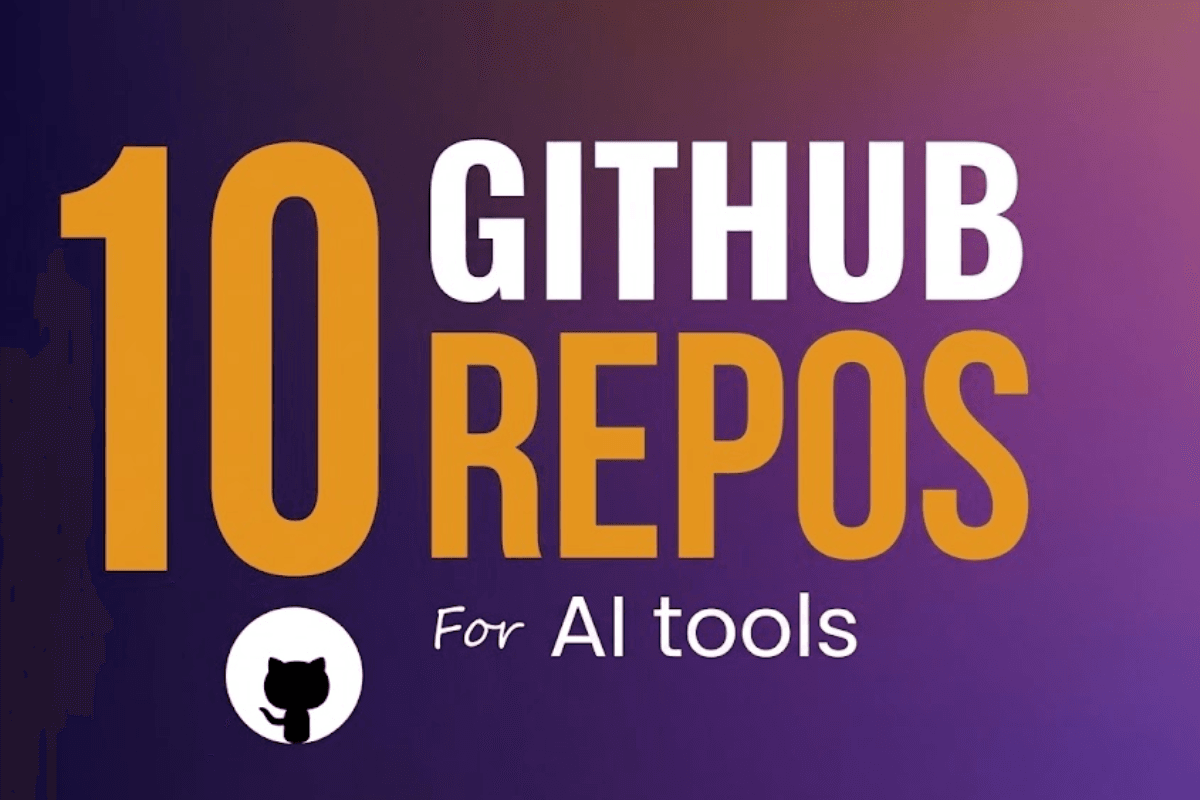
Most developers, creators, and businesses spend anywhere from $20 to $200+ every month on proprietary AI subscriptions—ChatGPT Plus, Claude Pro, Midjourney, custom API gateways, and document chat apps.
Meanwhile, open-source developers are quietly building faster, privacy-first, and fully customizable alternatives that cost $0 and run directly on your own infrastructure.
Whether you want complete control over your data, lower API overhead, or custom workflows without vendor lock-in, here are 10 open-source GitHub repositories you should bookmark immediately.
Why Open-Source AI is Outpacing Paid Subscriptions
Before jumping into the list, it’s worth asking: Why make the switch to open-source AI?
- Zero Recurring Costs: Replace monthly per-user licenses with self-hosted software running on local hardware or cheap cloud instances.
- Complete Data Privacy: Keep sensitive customer data, proprietary code, and internal documents off third-party servers.
- No Vendor Lock-In: Switch between models (Llama, DeepSeek, Qwen, Claude, GPT-4) instantly without rewriting your core application logic.
- Infinite Customization: Tweak UI layouts, add custom API pipelines, and fine-tune system prompts to match exact technical requirements.
Top 10 Open-Source AI Repositories
1. Ollama

- GitHub Repository: ollama/ollama
- What it replaces: Paid desktop LLM clients and cloud API usage for local testing.
Ollama is the easiest way to run powerful open-weights large language models (like Llama 3, DeepSeek-R1, Mistral, and Qwen) locally on macOS, Linux, and Windows. It packages model weights, configurations, and data into a clean CLI tool, giving you a local REST API in seconds.
- Key Features:
- One-command installation and model downloads (
ollama run llama3). - Built-in OpenAI-compatible API endpoint for seamless integration with frontend apps.
- Low memory overhead with GGUF quantization support.
- One-command installation and model downloads (
2. Open WebUI

- GitHub Repository: open-webui/open-webui
- What it replaces: ChatGPT Plus / Claude Pro subscription UI ($20/month per user).
If you run local models with Ollama (or manage external APIs like OpenAI and Anthropic), Open WebUI gives you a full-featured, self-hosted web interface that mimics ChatGPT. It includes multi-user management, granular role permissions, code execution, and native document RAG (Retrieval-Augmented Generation).
- Key Features:
- Intuitive chat interface with dark mode, markdown rendering, and voice support.
- Integrated Web Search and document RAG out of the box.
- Role-based access control (RBAC) ideal for internal team deployments.
3. LangChain

- GitHub Repository: langchain-ai/langchain
- What it replaces: Proprietary AI agent frameworks and complex custom backend glue code.
LangChain remains the industry-standard open-source framework for building agentic workflows and LLM applications. It provides abstraction layers to chain models, vector databases, memory buffers, and third-party APIs into production-ready pipelines.
- Key Features:
- Massive library of pre-built integrations with databases, tools, and APIs.
- Modular architecture for building autonomous agents with tool-calling capabilities.
- Native ecosystem support (LangGraph, LangSmith) for stateful multi-agent orchestration.
4. LiteLLM

- GitHub Repository: BerriAI/litellm
- What it replaces: Expensive API gateway providers and vendor-specific SDK lock-in.
Managing multiple LLM providers (OpenAI, Anthropic, Gemini, Grok, local Ollama) usually requires writing custom SDK integrations for each one. LiteLLM standardizes all provider calls into a unified OpenAI-compatible format. You can call over 100+ LLMs using a single API syntax.
- Key Features:
- Call 100+ LLMs using a single, unified interface.
- Self-hostable Proxy Server with load balancing, rate limiting, and fallback routing.
- Detailed cost tracking and budget controls per user or API key.
5. Crawl4AI

- GitHub Repository: unclecode/crawl4ai
- What it replaces: Costly web scrapers and unstructured-data cleanup tools.
AI agents need clean, structured web data to perform effectively. Standard web scrapers produce bloated HTML full of JavaScript, ads, and navigation menus. Crawl4AI automatically crawls websites and transforms raw HTML into clean, AI-ready Markdown or structured JSON tailored for RAG pipelines.
- Key Features:
- Fast, parallel crawling optimized for LLM consumption.
- Smart extraction of main content, removing headers, footers, and script tags automatically.
- Supports dynamic SPA rendering (Playwright-backed).
6. Flowise

- GitHub Repository: FlowiseAI/Flowise
- What it replaces: Proprietary no-code AI builders like Voiceflow or Relevance AI.
Flowise is an open-source, node-based UI tool for building LLM apps and multi-agent workflows visually. Built on top of LangChain, it allows engineers and non-technical team members to drag and drop models, vector stores, and custom tools to build working prototypes in minutes.
- Key Features:
- Drag-and-drop canvas for complex AI logic and RAG flows.
- One-click API deployment and embedded chat widgets for websites.
- Integrated testing playground and state management.
7. AnythingLLM

- GitHub Repository: Mintplex-Labs/anything-llm
- What it replaces: Paid enterprise document chat tools (e.g., ChatPDF, CustomGPT).
AnythingLLM is an all-in-one desktop and enterprise application for chatting with your local files and knowledge base. It handles document parsing, vector embedding storage, and chat retrieval in a single bundle with zero configuration required.
- Key Features:
- Supports PDFs, DOCX, CSVs, web URLs, and audio transcriptions.
- Complete privacy—runs 100% offline when paired with local models (Ollama/LM Studio).
- Multi-user workspaces with customizable embedding models and vector databases.
8. ComfyUI

- GitHub Repository: comfyanonymous/ComfyUI
- What it replaces: Midjourney subscriptions and static web UIs for image generation.
ComfyUI is the most powerful node-based visual workflow editor for Stable Diffusion, Flux, and AI image/video generation. Instead of basic prompt boxes, ComfyUI lets you design precise generation pipelines, combineControlNets, fine-tune latent space, and automate complex image processing tasks.
- Key Features:
- Modular node-based interface offering total control over the diffusion pipeline.
- Dramatically faster execution and lower VRAM usage compared to standard web UIs.
- Reproducible workflows that can be saved and shared as simple JSON files.
9. n8n

- GitHub Repository: n8n-io/n8n
- What it replaces: Zapier, Make, and expensive workflow automation tools ($50–300/month).
While n8n is famous as a general workflow automation tool, its native AI nodes make it one of the strongest open-source platforms for building AI agents. You can connect LLMs directly to over 400 business tools (Slack, Postgres, Linear, Gmail, HubSpot) without writing custom integration code.
- Key Features:
- Self-hostable automation platform with fair-code licensing.
- Native LangChain nodes for autonomous decision-making and memory.
- Visual node-based workflow builder with deep error-handling capabilities.
10. FastAPI

- GitHub Repository: fastapi/fastapi
- What it replaces: Slow, legacy backend frameworks for AI microservices.
Virtually every modern Python-based AI tool relies on FastAPI as its underlying backbone. When you need to wrap your LLMs, custom models, or RAG pipelines into a production-grade, asynchronous API with high performance, FastAPI is the undisputed industry standard.
- Key Features:
- Extremely fast performance (on par with NodeJS and Go) leveraging ASGI.
- Automatic OpenAPI (Swagger) interactive documentation generation.
- Built-in data validation via Pydantic for type safety across LLM payloads.
Get real time update about this category directly on your device, subscribe now.