Barsha Chowdhury
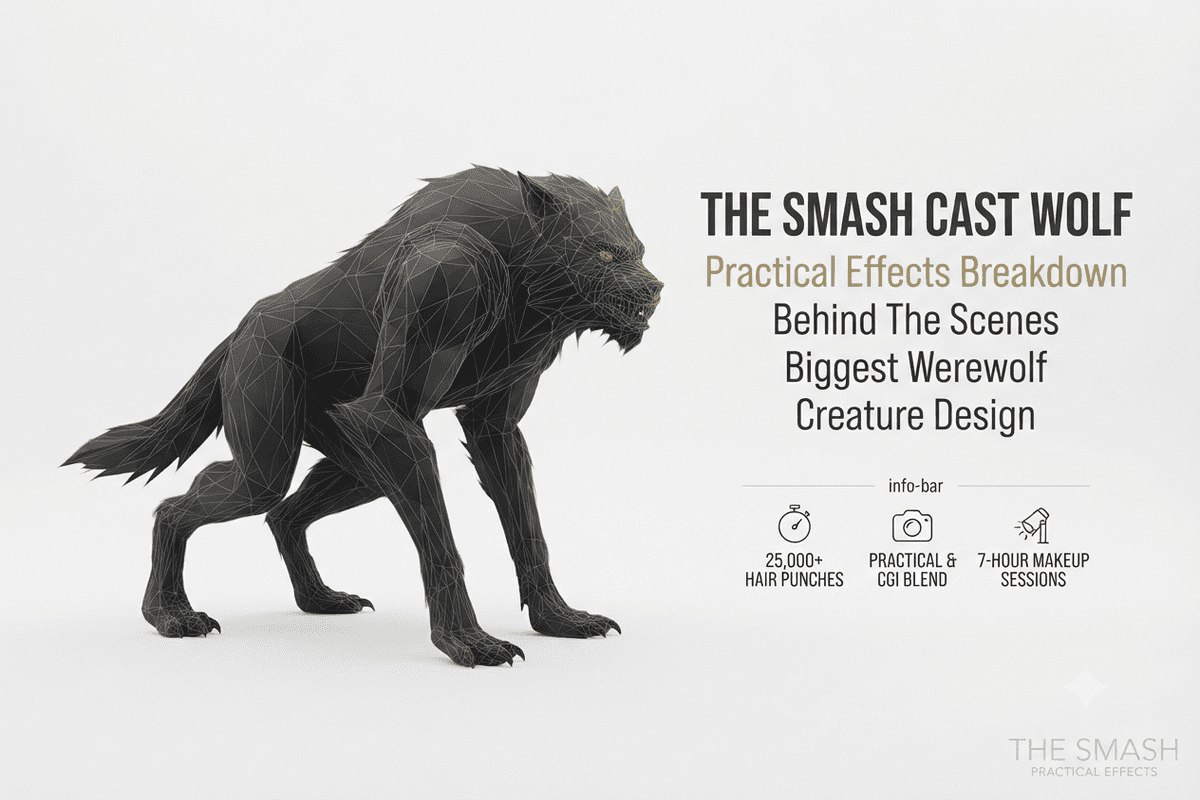
Creating a believable monster on screen is harder than ever, especially when audiences spot bad CGI immediately something The Smash cast werewolf team knew all too well before filming began. Fortunately, the filmmakers solved this challenge by blending massive practical prosthetics with cutting-edge digital effects. In this exclusive breakdown, we will explore how the actors reacted on set, the technical secrets behind the beast, and why this creature sets a new industry benchmark.
Table of Contents
Inside The Smash Cast Interview: First Reactions on Set
When actors step onto a soundstage, they usually expect to act opposite a tennis ball on a green stick. During a recent The Smash cast interview, the lead performers revealed they were stunned to find an eight-foot-tall animatronic beast waiting for them instead.
Seeing the biggest werewolf in The Smash in person completely changed how the actors approached their scenes. Instead of faking fear, their genuine adrenaline translated directly to the camera.
- Authentic Fear: Actors noted that the sheer physical weight and roaring hydraulics of the practical rig forced them to react instinctively.
- Eye-Line Accuracy: Having a towering physical stand-in eliminated the awkward eye-line mismatches common in modern creature features.
- Physical Choreography: Stunt performers worked closely with The Smash movie cast to time dodges and hits around the animatronic’s heavy mechanical sweep.
“You don’t have to pretend to be terrified when a 400-pound mechanical predator is lunging three feet from your face,” the lead actor shared during The Smash cast discussion.
How the Werewolf Was Created in The Smash
Bringing an apex supernatural predator to life requires more than just a guy in a rubber suit. Understanding how the werewolf was created in The Smash means looking at the delicate balance between old-school artistry and modern computer graphics.
Practical Effects Meet Digital Polish
According to industry analysis from the Visual Effects Society, modern audiences consistently rate hybrid creatures those combining physical puppets with CGI facial enhancements higher in realism than purely digital characters. The production team leaned heavily into this hybrid approach.
During The Smash movie behind the scenes production, special effects artists spent six months sculpting anatomical muscle structures before casting them in medical-grade silicone.
Engineering the Anatomy and Movement
To ensure the werewolf transformation in The Smash felt grounded in reality, creature designers studied real-world apex predators like timber wolves and grizzly bears.
- Skeletal Proportions: Designers elongated the hind legs using custom digitigrade stilts, giving the monster an unnatural, forward-leaning predatory stance.
- Fur and Texture: Over 15,000 individual hair punches were applied by hand to the hero mask so wind machines could ruffle the coat naturally on set.
- Facial Micro-Expressions: Digital artists tracked 120 facial markers on the creature performer to layer realistic snarls, eye dilation, and muzzle twitches in post-production.
If you love diving into monster movie magic, check out our complete guide to classic practical movie monsters to see how far creature artistry has come.
The Smash Cast Discusses Werewolf Transformation Scenes
The centerpiece of any lycanthrope film is the metamorphosis sequence, and The Smash cast discusses werewolf transformation scenes as the most physically grueling days of the entire shoot.
Rather than cutting away to a computer-generated morph, the director insisted on capturing the werewolf movie transformation in long, unbroken takes. The performer playing the afflicted character endured up to seven hours in the makeup chair daily to apply sequential prosthetic stages.
The Pros and Cons of Practical Creature Effects
While the results on screen are undeniably thrilling, making of the biggest werewolf came with major production trade-offs that every filmmaker should understand.
Pros of Hybrid Practical Effects:
- Natural Lighting Interaction: Real fur, saliva, and textured skin catch set lighting and shadows in ways digital shaders still struggle to replicate.
- Stronger Actor Performances: Cast members deliver more grounded, emotional reactions when interacting with a tangible threat.
- Timeless Visuals: Practical creatures age far better over decades than purely CGI-rendered models.
Cons of Hybrid Practical Effects:
- grueling Makeup Schedules: Daily prosthetic applications eat heavily into filming hours and test performer stamina.
- Mechanical Limitations: Heavy animatronics move slower than digital models, requiring clever camera angles to sell speed.
- Higher Upfront Costs: Building physical rigs and silicone suits requires massive pre-production budgets before cameras even roll.
Why The Smash Supernatural Creature Stands Out
Audiences today are bombarded with weightless, glossy CGI monsters that rarely leave a lasting impression. By contrast, The Smash supernatural creature feels heavy, dangerous, and biologically plausible.
During The Smash cast talks about the biggest werewolf press tour, the crew emphasized that every scar, matted patch of fur, and broken claw told a story. The Smash movie creature design intentionally avoided looking sleek or heroic—instead, the beast looks like a tormented, hulking force of nature.
For aspiring filmmakers and horror fans, the takeaway is clear: technology works best when it enhances physical reality rather than replacing it. You can explore more insights on modern horror cinematography techniques to see how lighting and camera movement amplify practical monster designs.
Wrapping Up the Beastly Breakdown
From seven-hour prosthetic sessions to an eight-foot animatronic rig, behind the scenes of The Smash werewolf reveals a passionate commitment to tactile filmmaking. By combining physical creature artistry with subtle digital enhancements, the filmmakers gave the cast a real monster to react against and gave audiences a werewolf worth fearing.
What did you think of The Smash cast werewolf breakdown? Drop your favorite movie monster design in the comments below, or explore our latest behind-the-scenes features to discover how today’s biggest thrillers are made.
Frequently Asked Questions
How tall was the biggest werewolf featured in The Smash?
The practical animatronic and stunt suit used for the biggest werewolf featured in The Smash stood just over eight feet tall on digitigrade stilts. Filmmakers used low-angle wide lenses to emphasize its towering scale alongside the human cast.
Did The Smash use CGI or practical effects for the werewolf?
The production used a hybrid approach combining full-scale silicone prosthetics, mechanical animatronics, and digital enhancements. Practical rigs handled on-set lighting and physical interactions, while CGI refined fast-moving action and facial micro-expressions.
How long did the werewolf transformation makeup take on set?
Applying the multi-stage silicone prosthetics and hand-punched fur took between five and seven hours each filming day. To keep production moving, the crew filmed transformation stages in sequential blocks across multiple days.
Why did the cast prefer acting against a practical werewolf?
Acting opposite a tangible, roaring creature rig allowed the cast to maintain natural eye lines and channel genuine physical adrenaline. This eliminated the guesswork of reacting to empty green screens and resulted in more believable performances.
Get real time update about this category directly on your device, subscribe now.
Have any thoughts?
Share your reaction or leave a quick response — we’d love to hear what you think!
-
 0
- 0
- 0
- 0
- 0
- 0