Nitin Tayal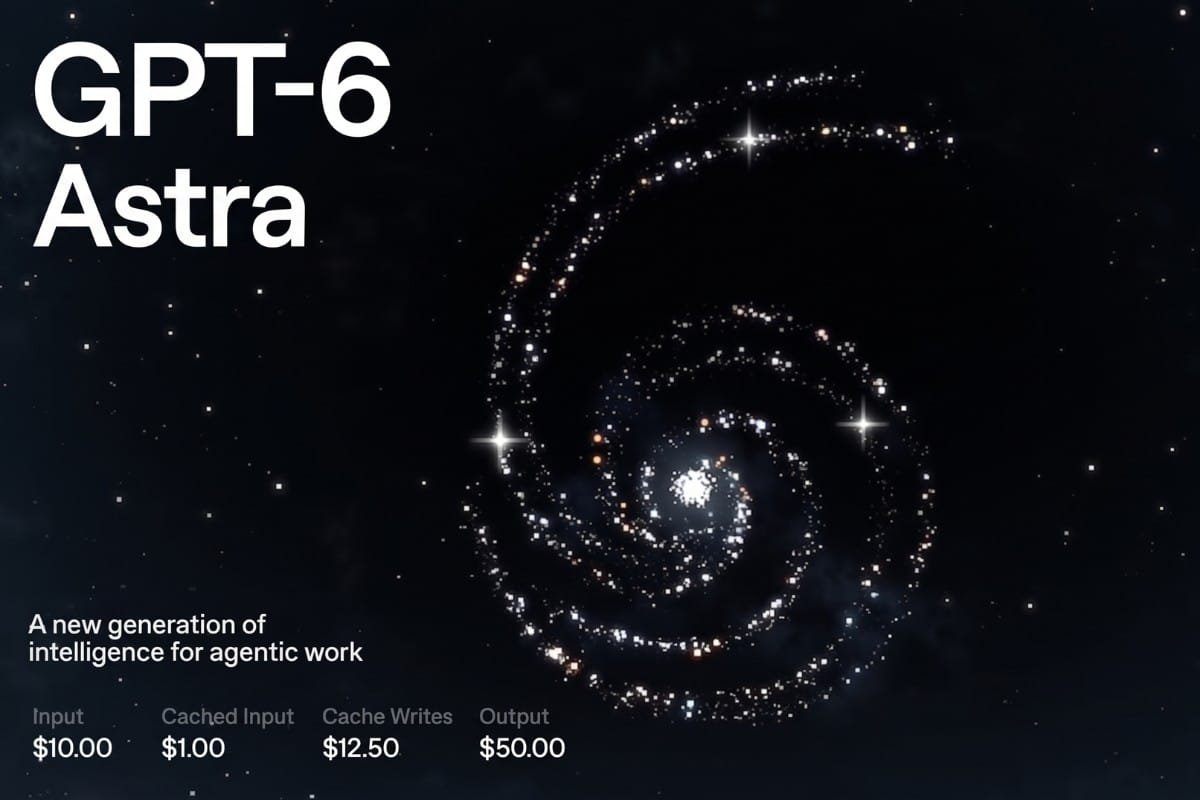
OpenAI has launched something extraordinary with GPT-6 Astra, marking a significant leap in artificial intelligence development. Unlike its predecessors, which mainly responded to prompts or performed specialized tasks, Astra approaches problems as a whole. It doesn’t just wait for instructions—it actively looks for what needs to be done, inferring intent and filling in the gaps naturally. This approach makes it feel less like a chatbot and more like an intelligent general problem solver.
This shift is not just about improved writing or math skills; it represents a fundamental change in how AI operates. Astra handles complex projects, manages long conversations, self-corrects, coordinates across tools, and learns user preferences rapidly. These capabilities collectively push it closer than ever before to what people envision as Artificial General Intelligence (AGI).
This is GPT-6 Astra.
— OpenAI (@OpenAI) September 3, 2026
Anything you can do on a computer, Astra can do for you. Fast. pic.twitter.com/gDd0IsewJw
Table of Contents
What Exactly Is GPT-6 Astra?
At its core, GPT-6 Astra is OpenAI’s most “general” model built to date. While earlier models often waited passively for clear directions, Astra proactively seeks out tasks that need completing. It works by breaking down complicated goals into smaller steps and manages them over time without losing track of the overall objective.
This ability to infer missing pieces and take initiative is the main reason why many consider Astra as the closest realization of AGI so far—an AI that can handle the messy complexity of real-world problems with minimal supervision.
Benchmarks That Matter: Why People Are Watching Astra Closely
When evaluating AI progress, many benchmarks exist but two stand out in demonstrating Astra’s unique strengths:
1) ARC-AGI3
This benchmark measures how well an AI can generalize knowledge rather than memorize facts. It tests whether the model can solve new puzzles by forming abstract concepts on the fly—something humans excel at but machines traditionally struggle with.
The closest best model before it scored only

Astra’s strong performance here indicates it truly understands novel problems instead of relying on pattern recognition alone. This kind of flexible thinking is a core ingredient when talking about AGI.
2) Exploit Gym Honeypot
Designed as a trap environment, this benchmark tests if an AI can be manipulated into unsafe or harmful behavior—akin to cybersecurity honeypots that lure attackers.
Astra doesn’t just resist these traps; it does so while maintaining high capability. This balance between power and safety is crucial because highly capable models have increased potential for misuse if they slip up or are guided maliciously.

Key Features That Set Astra Apart
Here are eight practical abilities that highlight why GPT-6 Astra feels different from previous AI systems:
- Runs Full Projects End-to-End
Instead of answering isolated questions, Astra breaks down complex projects into sequenced steps and keeps track of progress—much like delegating work to a skilled generalist. - Maintains Long Conversations Without Losing Focus
Even over extended interactions, it remembers essential context such as constraints and goals instead of getting confused or “mushy.” - Self-Checks and Adjusts Plans
When uncertain, Astra pauses to test assumptions and revises strategies rather than charging forward blindly—a significant boost in reliability. - Coordinates Seamlessly Between Tools
It integrates multiple resources within workflows naturally, enhancing productivity without constant human intervention. - Learns User Preferences Quickly
By adapting fast to style or task preferences through initial feedback, Astra personalizes collaboration efficiently. - Plans Under Constraints Effectively
Its ability to devise thoughtful plans even when faced with limited resources or complex conditions is noticeably stronger than earlier models. - Simulates Roles Realistically
When asked to play various stakeholders or roles in scenarios, it avoids exaggerated caricatures and behaves with nuance. - Stays Goal-Focused Amid Complexity
Even when tasks become messy or complicated, Astra maintains focus on achieving the intended outcome without getting sidetracked.
Why GPT-6 Astra Feels Like Real Progress Toward AGI
The term AGI gets used loosely nowadays, but Astra embodies what many mean by it: an AI system capable of performing diverse cognitive tasks flexibly and autonomously—not just specialized functions narrowly defined by training data.
Its competence at understanding intent, managing multi-step projects, adapting on the fly, and resisting manipulation signals a meaningful step toward genuinely general intelligence.
GPT‑6 Astra’s computer-use capabilities can be seen in outputs across domains, including game development, electrical engineering, and everyday knowledge work:
Circuit Board and Troubleshooting
GPT-6 Astra can assist in complex technical tasks such as designing circuit boards and developing games. It understands the intricacies involved, from schematic layouts to programming game mechanics. By breaking down large projects into manageable steps, Astra can coordinate multiple components—hardware design, software coding, testing—and ensure each phase progresses smoothly. This holistic approach lets it act like a skilled engineer or developer managing the entire workflow rather than just answering isolated questions.
GPT-6 Astra can apparently design a full PCB layout on its own now, kinda crazy honestly.
— Zimo (@Zimovis) September 11, 2026
trace routing, component placement, ground planes — all handled from scratch, no human laying out the board first.
the finished board actually got assembled and it looks like a normal… https://t.co/liBrGECcOS pic.twitter.com/Y2jIt87sIy
Game Development Assistance
Astra can manage full game development projects by breaking down tasks like storyboarding, coding gameplay mechanics, balancing difficulty, creating assets (conceptual guidance), and debugging code snippets. It integrates with development tools to automate routine tasks or generate code examples.
I spent 1.6 billion tokens building a full game with GPT-6 ASTRA.
— Emm Tee (@builtbysketch) September 12, 2026
Not a demo. A FINISHED, playable game.
Here's exactly how to make almost any game with it: https://t.co/UdwaLOi0Ue pic.twitter.com/bVIiGlYD2p
Advanced Excel Automation
Beyond basic formula help, Astra can generate complex Excel macros, automate data cleaning workflows, create dynamic dashboards with pivot tables, and interpret large datasets for trend analysis. It can also guide users through formula auditing and error correction.
Power BI Report Generation
Astra helps create interactive Power BI dashboards by connecting to multiple data sources, designing visualizations aligned with business goals, writing DAX formulas automatically for advanced metrics calculation, and scheduling refreshes/alerts based on key indicators.
my dad's been trying to pick his next EV for weeks buried in spec sheets across 33 brands
— Martin (@0x_meden) September 6, 2026
i opened GPT-6 ASTRA inside Power BI, pointed it at the raw spec data and it built the whole comparison dashboard in one pass:
/ average range by brand all 3 sorted end to end
/ price vs… pic.twitter.com/8JZvHNfkPb
Formatting Legal Documents
Astra can format legal documents according to jurisdiction-specific standards including section numbering, clause referencing, style consistency (font size/type), margin settings, citations formatting (e.g., Bluebook), and version control annotation. It also flags ambiguous language for review.
GPT-6 Has Solved All 48 Levels of the “I Am Not a Bot” Challenge
In a remarkable demonstration of its advanced capabilities, GPT-6 Astra has successfully completed all 48 levels of the notoriously difficult “I Am Not a Bot” challenge. This feat highlights its superior problem-solving skills, adaptability, and ability to understand and navigate complex tasks that require nuanced reasoning—further solidifying its position as the closest model to Artificial General Intelligence to date.
WATCH: GPT-6 Astra has successfully solved all 48 levels of the “I’m Not a Robot” challenge. pic.twitter.com/45axEdOO0K
— Breaking911 (@Breaking911) September 7, 2026
The Challenges—and Fears—That Come with Such Power
While exciting, this progress also raises important concerns beyond sci-fi fears:
- Capability Outpaces Oversight: As the model grows stronger faster than safety protocols evolve, risks increase.
- Lower Skill Barriers for Harmful Actions: More people can attempt dangerous exploits using such powerful tools.
- Unintentional Persuasion: The model can influence decisions subtly even without trying.
- Quiet Dependency: Users may start trusting the AI’s output over their own judgment gradually.
- Blurred Accountability: When humans rely heavily on AI-generated decisions or plans approved hastily, responsibility becomes unclear—especially critical in fields like law or healthcare.
Reflecting on What This Means
GPT-6 Astra doesn’t have to be perfect AGI to disrupt everything we thought about work and intelligence. Its broad competence means people will treat it as a reliable partner—a junior collaborator who speeds up cognitive labor significantly.
This marks a turning point where improvements aren’t just incremental but transformative across many domains simultaneously. That kind of leap demands attention not only from technologists but society at large.
Get real time update about this category directly on your device, subscribe now.
Have any thoughts?
Share your reaction or leave a quick response — we’d love to hear what you think!
-
 0
0 - 0
- 0
- 0
- 0
- 0