Barsha Chowdhury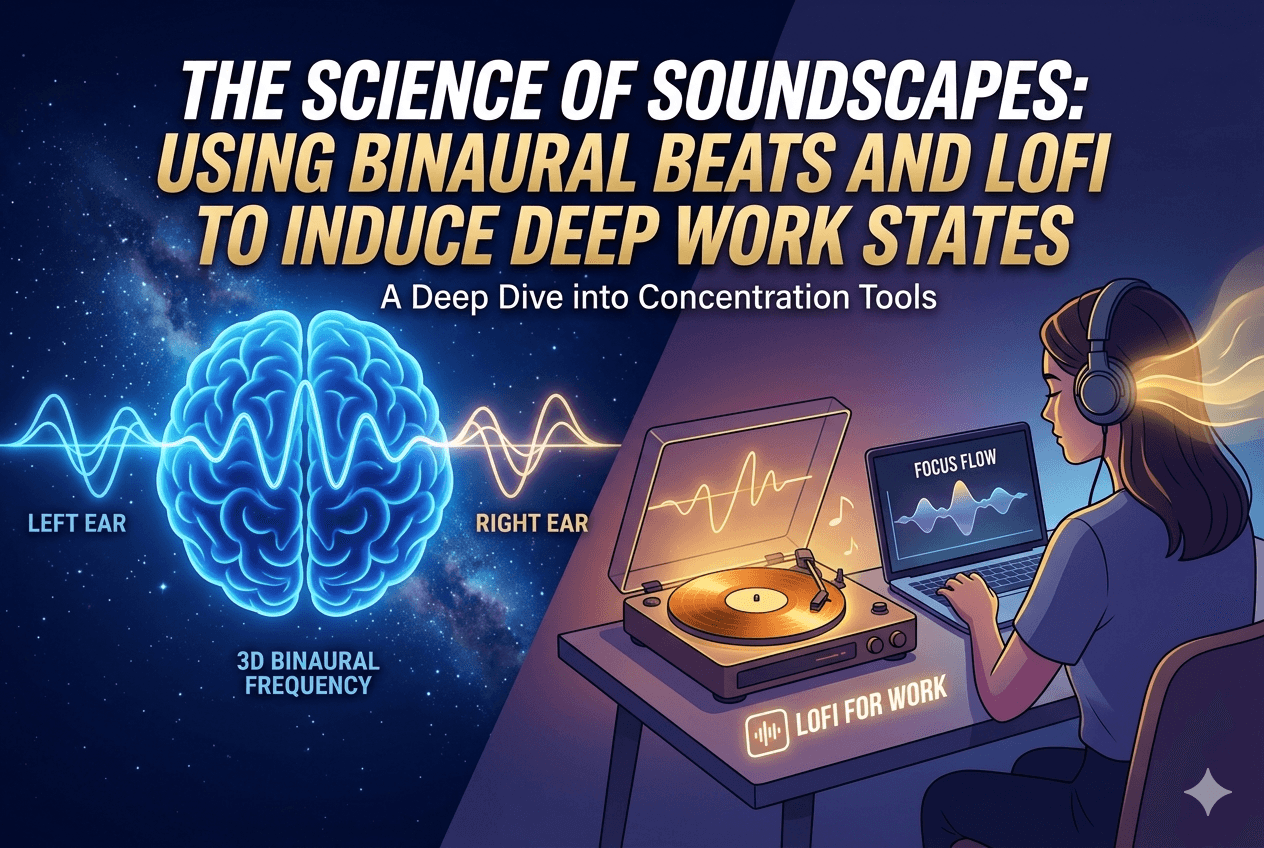
Modern life is loud.
Notifications, conversations, traffic, social media, and endless tabs constantly compete for attention. For students and professionals alike, maintaining concentration for even 30 minutes can feel difficult.
That’s why more people are turning to a soundscape for deep work and carefully designed audio environments intended to improve focus, reduce distractions, and help the brain enter a productive mental state.
From binaural beats for focus to calming lofi music for studying, sound-based productivity tools have exploded in popularity. Millions now listen to ambient playlists while coding, studying, writing, or working remotely.
But do these soundscapes actually work?
The answer lies in neuroscience, psychology, and how the brain processes sound.
Table of Contents
What Is a Soundscape for Deep Work?
A soundscape for deep work refers to a curated audio environment designed to help people maintain concentration and cognitive flow.
These soundscapes may include:
- Ambient nature sounds
- Instrumental music
- White noise
- Brown noise
- Binaural beats
- Lofi beats
- Café ambience
- Rain or thunder sounds
The goal is simple:
Reduce mental friction and make sustained concentration easier.
The concept connects closely with the idea of “deep work,” popularized by , which describes uninterrupted periods of cognitively demanding work.
Why the Brain Responds to Sound During Focus
The human brain constantly scans environments for threats and distractions.
Silence can sometimes feel uncomfortable because the brain becomes hyperaware of small interruptions. On the other hand, chaotic noise overwhelms attention.
A balanced audio environment helps regulate cognitive load.
Research from the and other institutions suggests that certain repetitive or low-complexity sounds may improve attention and reduce stress during mentally demanding tasks.
Sound influences:
- Mood
- Attention span
- Stress levels
- Working memory
- Cognitive stamina
This explains why many people instinctively use music while studying or working.
The Science Behind Binaural Beats for Focus
What Are Binaural Beats?
Binaural beats occur when two slightly different frequencies are played separately into each ear.
For example:
- Left ear: 200 Hz
- Right ear: 210 Hz
The brain perceives a third frequency in this case, 10 Hz.
Researchers believe this may encourage brainwave synchronization.
Brainwave States and Productivity
Different brainwave frequencies are associated with mental states.
- Delta → deep sleep
- Theta → meditation and creativity
- Alpha → relaxed focus
- Beta → alert concentration
- Gamma → high-level cognition
For productivity, beta and low gamma frequencies are often targeted.
Do Binaural Beats Actually Work?
Scientific evidence is mixed but promising.
Some studies suggest binaural beats for focus may:
- Improve sustained attention
- Reduce anxiety
- Increase relaxation
- Enhance task performance
However, researchers also note that effects vary between individuals.
Factors affecting results include:
- Headphone quality
- Listening duration
- Personality differences
- Noise sensitivity
- Task complexity
The biggest takeaway?
Binaural beats are not magic productivity shortcuts, but they may help create mental conditions favorable for concentration.
Why Lofi Music for Studying Became So Popular
The Rise of Lofi Culture
Lofi music for studying exploded online during the late 2010s.
Streaming platforms and 24/7 study livestreams turned mellow instrumental beats into a global productivity phenomenon.
Its appeal comes from simplicity.
Lofi tracks usually feature:
- Soft drum loops
- Jazz-inspired chords
- Vinyl crackle textures
- Minimal vocals
- Slow rhythms
This creates emotional comfort without overwhelming the brain.
Why Lofi Helps Focus
Unlike lyrical pop music, lofi avoids sudden changes and verbal distractions.
This consistency may help the brain maintain “flow states,” where concentration feels natural and uninterrupted.
Many students also associate lofi with routines like:
- Late-night studying
- Journaling
- Reading
- Coding
- Creative writing
That emotional association strengthens productivity habits over time.
Comparing Binaural Beats, Lofi, and White Noise
| Audio type | Best for | Strengths | Weaknesses |
| Binaural Beats | Intense concentration | Brainwave synchronization | Requires headphones |
| Lofi Music | Relaxed studying | Emotionally calming | May become repetitive |
| White Noise | Blocking distractions | Excellent for noisy spaces | Can feel monotonous |
| Brown Noise | Deep focus | Softer than white noise | Less stimulating |
| Nature Sounds | Stress reduction | Calming effect | May not suit analytical tasks |
The best soundscapes for productivity depend on personal preference and work style.
How to Build the Perfect Deep Work Audio Environment
1. Match Audio to the Task
Different tasks require different sound environments.
Creative Work
Use:
- Ambient music
- Nature sounds
- Lofi beats
Analytical Work
Use:
- Brown noise
- Binaural beats
- Minimal ambient sounds
2. Use Headphones Strategically
Noise-canceling headphones help reduce unpredictable distractions.
This improves immersion and mental consistency.
3. Keep Volume Moderate
Extremely loud audio reduces concentration.
Research suggests moderate background sound is usually most effective.
4. Pair Sound With Routine
The brain forms associations.
Listening to the same deep work music before focused sessions can psychologically signal “work mode.”
Over time, concentration becomes easier.
5. Limit Multitasking
Even the best focus music for work cannot compensate for constant context switching.
Close unnecessary tabs.
Mute notifications.
Protect uninterrupted time.
Common Mistakes That Reduce Productivity
Using Music With Lyrics
Lyrics compete with language-processing areas of the brain.
This makes reading, writing, and studying harder.
Constantly Switching Playlists
Frequent changes interrupt cognitive flow.
Choose longer playlists or continuous soundscapes.
Overstimulating Audio
Fast EDM or aggressive music may increase energy but reduce deep concentration.
Depending Entirely on Productivity Audio
Sound helps support focus.
It does not replace:
- Sleep
- Nutrition
- Time management
- Discipline
Best Platforms and Tools for Focus Music
Popular platforms for deep work music include:
- YouTube livestreams
- Spotify focus playlists
- Brain.fm
- Endel
- Noisli
Some apps now use AI-generated adaptive soundscapes that adjust based on mood, time, or work intensity.
The productivity audio industry is rapidly expanding as remote work becomes more common.
The Future of Productivity Soundscapes
Audio technology is becoming increasingly personalized.
Emerging trends include:
- AI-generated focus environments
- Adaptive neurofeedback music
- Spatial audio immersion
- Personalized cognitive sound profiles
- Wearable focus technology
As neuroscience and digital wellness evolve, sound may become a major part of productivity optimization.
FAQ Section
1. Do binaural beats really improve focus?
Some research suggests binaural beats may improve attention and relaxation, though results vary between individuals.
2. Is lofi music scientifically proven to help studying?
There is limited direct research on lofi specifically, but calm instrumental music may support concentration by reducing distractions.
3.What is the best soundscape for productivity?
The best soundscape depends on the person and task. Many people prefer brown noise, ambient music, or binaural beats.
4.Can music increase deep work performance?
Background audio may help some individuals maintain flow states and reduce environmental distractions.
5.Are headphones necessary for binaural beats?
Yes. Binaural beats require stereo separation, meaning headphones are essential.
Conclusion
A carefully designed soundscape for deep work can become a powerful productivity tool.
Whether through binaural beats for focus, calming ambient noise, or lofi music for studying, audio environments help many people reduce distractions and maintain concentration for longer periods.
The science is still evolving, but one thing is clear:Sound affects how we think, feel, and work.
The key is experimentation.
Test different soundscapes, observe your focus levels, and create an audio routine that supports your goals.
Call-to-Action
What kind of soundscape helps you focus best?
Share your favorite deep work music, productivity playlists, or study routines in the comments. If you enjoyed this article, share it with friends, coworkers, or students looking to improve concentration naturally.
Get real time update about this category directly on your device, subscribe now.