Barsha Chowdhury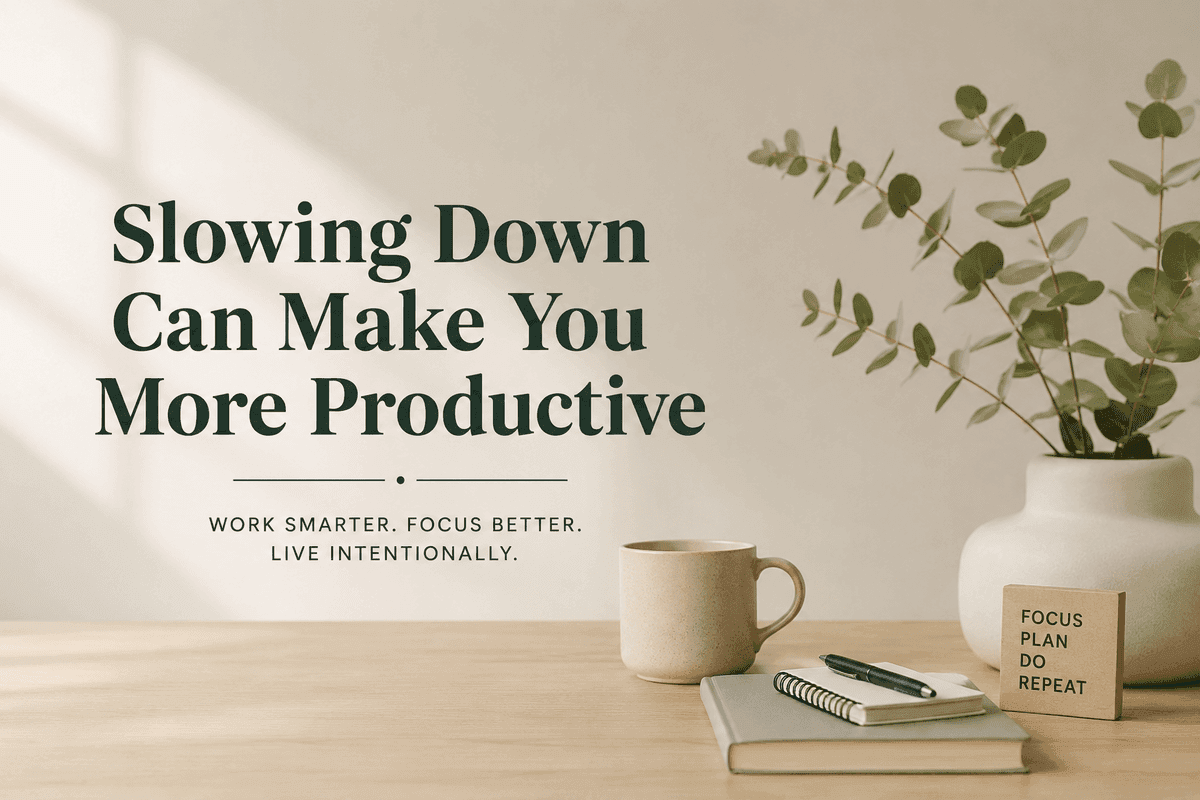
Slowing down can make you more productive, yet most of us believe the opposite. We fill every minute with work, multitask endlessly, and still end the day feeling exhausted. The good news? Working harder isn’t always the answer.
This guide will show you why slowing down actually improves results, the science behind mindful productivity, and practical ways to accomplish more without burning out. By the end, you’ll know how to work smarter, protect your energy, and create sustainable productivity habits.
Table of Contents
Why Slowing Down Isn’t the Same as Being Lazy
Modern culture celebrates being busy. Long hours, overflowing schedules, and constant notifications often seem like signs of success.
But busyness and productivity aren’t the same thing.
When your brain constantly switches between tasks, your attention becomes fragmented. Instead of producing quality work, you spend valuable energy simply trying to refocus.
Choosing slow productivity means intentionally doing fewer things but doing them better. It’s about making every hour count rather than filling every hour with work.
The Science Behind Why Slowing Down Works
Research consistently shows that our brains perform best when they have periods of focused work balanced with adequate rest.
According to the American Psychological Association (APA), chronic workplace stress contributes significantly to lower productivity, increased absenteeism, and burnout.
Likewise, research from Stanford University found that productivity sharply declines once people consistently work beyond approximately 50 hours per week, and output drops dramatically after 55 hours.
The takeaway is simple:
- Rest improves thinking.
- Focus beats multitasking.
- Recovery is part of productivity.
Benefits of Slowing Down
The biggest benefits of slowing down extend far beyond simply feeling less stressed.
Better Focus
Your brain has fewer distractions, making it easier to complete important tasks with greater accuracy.
Higher Quality Work
Instead of rushing through everything, you naturally prioritize quality over quantity, resulting in fewer mistakes and better outcomes.
Lower Stress Levels
A slower pace reduces mental overload and helps you avoid burnout at work before it becomes a serious issue.
More Creativity
Creative thinking often happens during moments of rest, walks, or quiet reflection not during constant hustle.
How to Be More Productive Without Working Longer
Many people ask how to be more productive without adding extra hours.
The answer lies in working intentionally.
Prioritize One Important Task
Start each day with the task that creates the biggest impact.
Avoid checking emails or social media first thing in the morning.
Practice Deep Work
Author Cal Newport popularized deep work techniques, which involve working without distractions for uninterrupted periods.
Try:
- 60–90 minutes of focused work
- Phone on silent
- Browser tabs minimized
- Short recovery breaks
You’ll often accomplish more in two focused hours than in an entire distracted afternoon.
Practical Productivity Tips That Actually Work
Building sustainable productivity habits doesn’t require a complicated system.
Here are simple changes that make a real difference:
- Schedule breaks before you need them.
- Say no to unnecessary commitments.
- Turn off non-essential notifications.
- Work in focused blocks instead of multitasking.
- End your workday with tomorrow’s priority list.
These small adjustments help improve focus and productivity while protecting your mental energy.
Mindful Productivity Is the Future of Work
Rather than measuring success by how busy you appear, mindful productivity focuses on meaningful progress.
It encourages you to:
- Work with intention.
- Protect your attention.
- Respect your energy.
- Create healthier routines.
This approach supports intentional living, where your work aligns with your goals instead of constantly reacting to urgent tasks.
Work Smarter, Not Harder
The phrase work smarter not harder isn’t just motivational advice it’s supported by research.
Successful professionals often:
- Eliminate unnecessary tasks.
- Delegate repetitive work.
- Automate routine processes.
- Focus on high-value activities.
Doing more isn’t always better.
Doing the right things consistently is.
Building a Sustainable Productivity Routine
Long-term success depends on routines you can maintain.
Try this daily framework:
Morning
- Plan your top three priorities.
- Begin with your hardest task.
Afternoon
- Schedule focused work sessions.
- Take short movement breaks.
Evening
- Reflect on completed work.
- Prepare tomorrow’s priorities.
- Disconnect from work before bedtime.
Consistency beats intensity every time.
If you’d like more wellness and self-improvement ideas, check out our internal guide on Morning Habits That Boost Productivity.
Conclusion
The biggest productivity breakthrough isn’t squeezing more into your schedule , it’s creating space for focus, recovery, and meaningful work. Slowing down can make you more productive by improving concentration, reducing stress, and helping you produce higher-quality results without sacrificing your well-being.
Start with one small change today, and you’ll soon discover that slowing down may be the fastest path to lasting success. If you enjoyed this article, explore our related productivity guides and share your favorite strategy in the comments.
Frequently Asked Questions
1.Is slowing down really good for productivity?
Yes. Working at a sustainable pace improves concentration, reduces mistakes, and allows your brain to perform at its best. Consistent focus often produces better results than rushing through multiple tasks.
2. How can I avoid burnout at work?
Set realistic priorities, take regular breaks, maintain work-life boundaries, and avoid constant multitasking. Small daily habits help prevent long-term exhaustion while keeping productivity high.
3. What is mindful productivity?
Mindful productivity means working intentionally instead of staying busy for the sake of it. It focuses on meaningful progress, attention management, and protecting your mental energy.
4.How do deep work techniques improve focus?
Deep work removes distractions and allows uninterrupted concentration on one important task. This helps you complete complex work faster and with better quality.
5.What’s the easiest productivity habit to start today?
Choose one priority task every morning and complete it before checking emails or social media. This simple habit creates momentum and improves your overall productivity throughout the day.
Get real time update about this category directly on your device, subscribe now.
Have any thoughts?
Share your reaction or leave a quick response — we’d love to hear what you think!
-
 0
0 - 0
- 0
- 0
- 0
- 0