Barsha Chowdhury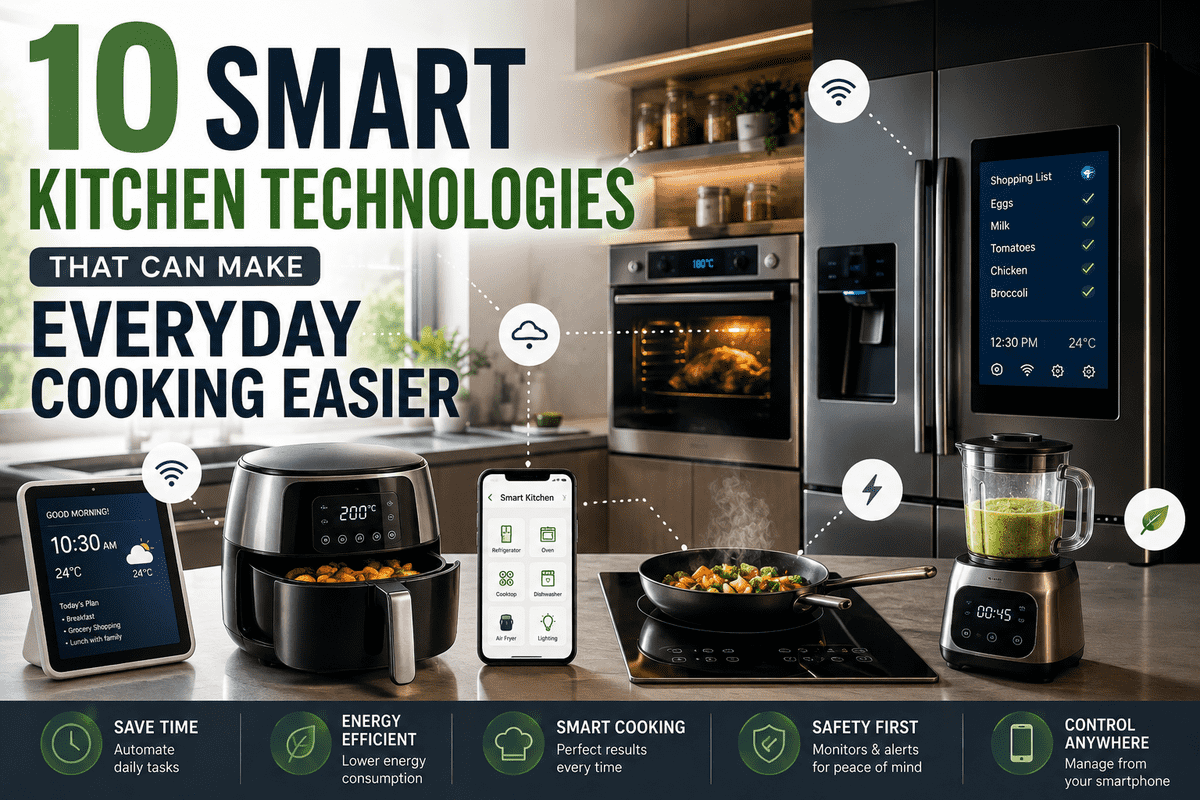
Table of Contents
Cooking every day can become tiring when meal planning, chopping, timing, cleaning, and keeping food fresh all compete for your attention. Smart kitchen technologies can reduce some of that effort by adding automation, sensors, connectivity, and better control to everyday kitchen tasks.
This guide explores 10 practical technologies—from smart refrigerators and connected ovens to induction cooktops and AI-powered appliances—and explains how they can make cooking more convenient, efficient, and organized.

1. Smart Refrigerators
A smart refrigerator is more than a place to store food. Many models now offer features such as temperature monitoring, door-open alerts, internal cameras, inventory assistance, and smartphone connectivity.
Some connected refrigerators can even let you check what’s inside without repeatedly opening the door. ENERGY STAR notes that connected appliances can provide features such as refrigerator door-open alerts and remote monitoring.
Why it is useful
- Helps monitor food storage
- Sends alerts when doors are left open
- Makes grocery planning easier
- Can provide better control over temperature settings
Keeping your refrigerator at a safe temperature is also important. The USDA recommends maintaining refrigerators at 40°F (4.4°C) or below.

2. Smart Ovens
Smart ovens are among the most useful examples of smart cooking technology. Depending on the model, they can connect to an app, provide cooking guidance, monitor temperature, and send notifications when a cooking cycle is complete.
Instead of constantly checking your food, you can receive an alert on your phone when your dish is ready.
Best for
- Busy professionals
- Beginners learning to cook
- People who frequently bake
- Families preparing multiple dishes
Some advanced models also use sensors to adjust cooking conditions automatically.
3. Smart Induction Cooktops
Induction cooking combines precision with modern technology. Unlike traditional cooking methods, induction uses electromagnetic energy to heat compatible cookware directly.
According to ENERGY STAR, about 85% of heating energy is transferred to cookware with induction, compared with about one-third for gas cooking products.
That makes an induction cooktop an attractive option for people looking for efficient modern kitchen technology.
Advantages
- Fast heating
- Precise temperature control
- Easier surface cleaning
- Less heat released into the kitchen
- Safety features on many models

4. Smart Air Fryers
Smart air fryers combine familiar countertop cooking with connected controls. Depending on the device, you may be able to select programs, adjust cooking settings, or monitor cooking through a smartphone application.
These smart kitchen appliances can be particularly useful when you want quick meals without constantly standing beside the appliance.
For example, you can prepare vegetables, potatoes, snacks, or other foods using preset programs while handling another kitchen task.
5. Connected Pressure Cookers
Connected pressure cookers bring automation to recipes that traditionally require close attention.
Many models offer preset programs for foods such as rice, beans, vegetables, soups, and meats. Some connected versions can also provide remote monitoring or recipe guidance.
A simple tip
Before buying one, check whether the cooking programs match the meals you actually prepare. More features don’t necessarily mean better value.
6. Smart Food Scales
A smart kitchen doesn’t always require a large appliance.
A connected food scale can pair with an app to measure ingredients accurately and sometimes provide nutritional information or recipe guidance.
This is particularly useful for:
- BakingPortion control
- Meal preparation
- Following precise recipes
- Tracking ingredients
For people who frequently experiment with recipes, a smart scale can turn measurements into a much more organized process.
7. Smart Kitchen Assistants and Voice Control
Voice assistants can make a smart home kitchen more convenient when your hands are covered in flour, dough, or ingredients.
You can use voice commands to:
- Set timers
- Convert measurements
- Add items to shopping lists
- Look up recipe instructions
- Control compatible appliances
This hands-free functionality is one of the simplest ways to introduce smart technology without replacing your entire kitchen.
8. AI-Powered Cooking Appliances
Artificial intelligence is increasingly becoming part of kitchen technology.
Some AI kitchen appliances can use cameras, sensors, software, or databases to identify foods, recommend cooking settings, or provide automated guidance.
Imagine placing food into an appliance and receiving suggestions for temperature and cooking time rather than manually searching for instructions every time.
However, AI features should be treated as assistance rather than a substitute for basic food-safety knowledge and cooking judgment.
9. Smart Dishwashers
Cleaning up after cooking can take almost as much energy as preparing the meal.
Smart dishwashers can offer features such as remote monitoring, cycle notifications, scheduling, and diagnostics. Some connected appliances can also provide information about their operation through smartphone apps.
ENERGY STAR reports that connected certified appliances can provide convenience features while helping users manage energy use.
Why consider one?
A smart dishwasher can be particularly helpful if you frequently cook large meals or have a busy household.
10. Smart Kitchen Sensors and Safety Devices
Technology can also make kitchens safer.
Connected sensors can monitor conditions such as temperature, smoke, water leaks, or appliance activity, depending on the system. Alerts can then be sent to your smartphone.
For example, a temperature-monitoring device can help you notice unusual changes in your refrigerator or freezer.
This is especially useful because food safety depends heavily on proper temperature control. The USDA advises keeping refrigerated foods at 40°F or below.
How to Choose the Right Smart Kitchen Technology
You don’t need to transform your entire kitchen overnight. Start with the technology that solves your biggest everyday problem.
Consider these factors
1. Your cooking habits:
Choose appliances that support the meals you regularly prepare.
2. Connectivity:
Check whether the appliance works with your smartphone and preferred smart-home ecosystem.
3. Energy efficiency:
Look for credible efficiency certifications where applicable. ENERGY STAR provides product information and certification guidance for several appliance categories.
4. Privacy and security:
Connected appliances may collect usage information, so review privacy settings and manufacturer policies before connecting them.5. Long-term value:Don’t pay extra for features you are unlikely to use.
Get real time update about this category directly on your device, subscribe now.